.png)
Open Container vs. DWI in Texas: Understanding the Difference

Alcohol-related driving offenses in Texas are governed by strict laws that are designed to protect the public. However, not every alcohol-related violation behind the wheel of a car is the same. Two charges that are often confused are open container violations and driving while intoxicated (DWI).
Both of these charges involve alcohol and motor vehicles. However, they are very different when you look at their definitions, their penalties, and how the law applies. Understanding open container vs. DWI in Texas is important, especially if you are charged with either of them.

What Is a DWI Charge in Texas?
A driving while intoxicated (DWI) offense is when a person operates a motor vehicle in a public place while intoxicated. (Texas Penal Code § 49.04).
Texas defines intoxication in two main ways. The first is the loss of normal use of mental or physical faculties due to alcohol, drugs, or other substances. The second is having a blood alcohol concentration, or BAC, of 0.08% or higher.
To determine if a driver is intoxicated, law enforcement officers will look at a number of factors. These might include:
Reckless or careless driving behavior
Physical signs such as slurred speech or bloodshot eyes
Field sobriety test results
Breath or blood alcohol testing
A DWI is a criminal offense, and a DWI arrest and conviction can lead to fines, suspended licenses, probation, or even a minimum jail time. Sparks Law Firm can help with other questions such as Is not speaking English a defense for a DWI in Texas?
What Is an Open Container Violation? Texas Open Container Laws
An open container violation is a different situation. (Texas Penal Code § 49.031). In this case, a person is committing a crime if they knowingly possess an open container of alcohol in the passenger area of a motor vehicle that is on a public highway.
The law defines an open container as a bottle, can, or other receptacle that contains alcohol and has been opened, has a broken seal, or has partially consumed contents. The passenger area of a vehicle includes the front seats, back seats, center console areas, and cupholders. An open container that is locked in a glove compartment or in the truck generally is not illegal.
Key Differences Between Open Container Violations and DWI
Though both of these offenses involve having alcohol in a vehicle, they are very different charges.
Intoxication vs. Possession
The main difference here is what the law allows and what it doesn't.
When a DWI is concerned, the law is focused on intoxication when operating a vehicle. When an open container law is concerned, the law is focused on open containers of alcohol inside the vehicle.
A driver can be totally and completely sober and still get an open container violation. Alternatively, a driver can be charged with DWI even if there is no open container in the vehicle.
Severity of the Charges
These two offenses often have different charges, too. An open container violation is most often a Class C misdemeanor. This is similar to a traffic ticket, and for a first offense, it's usually only a fine.
A first time DWI offense, however, is generally a Class B misdemeanor. This has more serious punishments and might involve:
Jail time
Larger fines
Driver’s license suspension
Penalties for an Open Container Violation
Since an open container violation is typically a Class C misdemeanor, those charged may face a fine of up to $500. However, there is almost never any jail time to serve. However, if a driver is charged with both an open container violation and a DWI, they could face more serious consequences due to that container being open.
In other words, an open container is serious on its own, but if it's also part of a DWI case, it can definitely bring harsher penalties. For more information, good criminal defense attorneys in Fort Worth may be able to help.
Penalties for a DWI in Texas
DWI offenses carry far more serious consequences than open container violations.
A first-time DWI conviction in Texas may include:
Up to 180 days in jail
A fine of up to $2,000
Driver’s license suspension
Annual surcharges or fees
Required alcohol education programs
Subsequent offenses can lead to felony charges, significantly larger fines, and longer periods of incarceration.
Because of these serious consequences, DWI charges are treated as major criminal matters in Texas courts.
How Open Containers Can Lead to DWI Investigations
Even though open container violations are separate offenses, they often play a role in DWI investigations.
If a law enforcement officer observes an open container inside a vehicle during a traffic stop, that discovery may prompt further investigation into whether the driver has been drinking.
The officer may then begin a DWI investigation by:
Asking questions about alcohol consumption
Observing the driver for signs of intoxication
Requesting field sobriety tests
Administering breath or blood alcohol testing
The presence of an open container does not automatically prove intoxication, but it can provide probable cause for officers to investigate further.
Passenger Open Containers in Texas
Some drivers assume that open container laws only apply to the driver. However, Texas law generally prohibits open containers anywhere in the passenger area of the vehicle, regardless of who possesses the alcohol.
This means that an open alcoholic beverage held by a passenger may still violate the law if the vehicle is on a public roadway.
There are exceptions for certain types of vehicles, including:
Limousines
Buses
Taxis
Other vehicles designed primarily for transporting passengers for compensation
In these vehicles, passengers may legally possess open alcohol containers under specific circumstances.
Open Containers in Parked Vehicles
Another area of confusion involves alcohol inside parked vehicles.
Texas open container laws typically apply when a vehicle is located on a public highway or public roadway. If a vehicle is parked in certain locations, the law may apply differently depending on the circumstances.
For example, an open container inside a parked vehicle on a public street could still be considered a violation. However, the legal analysis may depend on whether the vehicle is considered to be on a public highway under the statute.
Evidence in DWI and Open Container Cases
Both open container and DWI cases often rely heavily on evidence gathered during traffic stops.
This evidence may include:
Police reports
Body camera or dashboard camera footage
Field sobriety test results
Breathalyzer or blood test results
Photographs of containers found in the vehicle
In DWI cases, prosecutors must prove intoxication beyond a reasonable doubt. In open container cases, the focus is generally on whether an open alcohol container was present in the passenger area.
Because these offenses involve different legal elements, the evidence required to prove each charge may differ.
Why These Charges Are Often Confused
Many drivers assume that having an open container automatically means they will be charged with DWI. Others believe that if they are sober, having an open container does not matter.
Both assumptions can lead to confusion.
The truth is that open container violations and DWI offenses are separate laws, and one does not necessarily prove the other.
However, the presence of open alcohol in a vehicle can influence how law enforcement approaches a traffic stop and may contribute to further investigation.
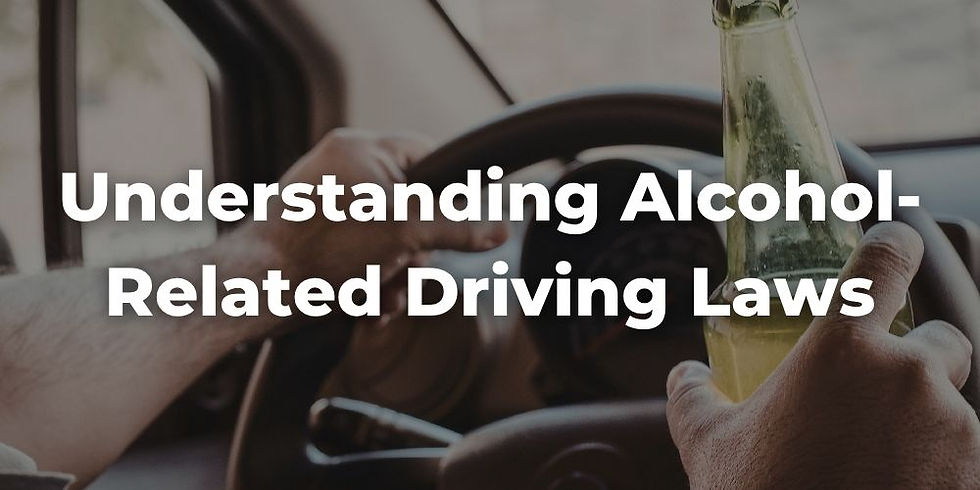
The Importance of Understanding Alcohol-Related Driving Laws
Alcohol-related offenses are taken seriously in Texas, and even relatively minor violations can have legal consequences. Understanding the difference between open container laws and DWI charges can help drivers recognize how these laws are enforced and why they are important. Learning how motions to suppress work in Texas DWI cases can also be helpful.
While an open container violation may appear less severe than a DWI charge, it can still affect a traffic stop and potentially lead to more serious allegations if other evidence suggests intoxication.
For individuals facing alcohol-related charges, the circumstances of the traffic stop, the evidence collected by law enforcement, and the specific legal allegations involved can all play a role in determining how the case proceeds.
Carefully examining these factors is often an important part of addressing and resolving these types of legal matters in Texas.
If you are facing any type of charge and you need a criminal defense lawyer, reach out to Sparks Law Firm. An attorney is available to start your DWI defense now. Free consultations are available.